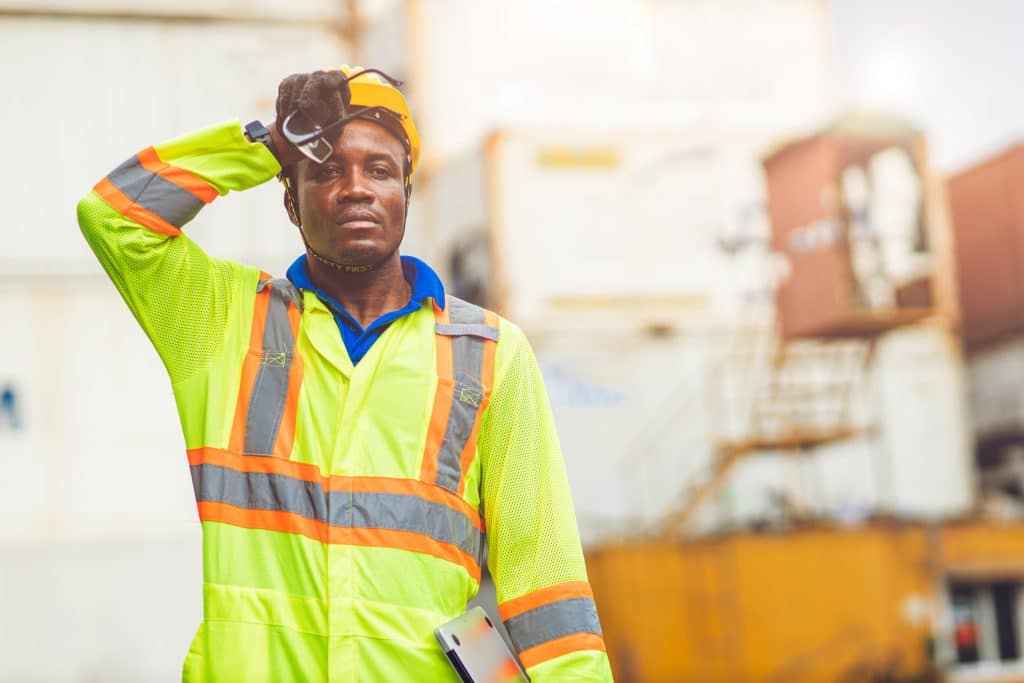
As summer temperatures begin to climb across Washington state, a new set of emergency worker protection heat wave rules issued by the Washington Department of Labor and Industries (L&I) are taking effect to protect workers during excessive heat warnings.
The emergency rules, developed in reaction to last year’s record heat wave that was a factor in 100 deaths between June 26 and July 2, require employers to provide access to cool drinking water, shade, and paid rest breaks for farm and construction workers, roofers, road crews, and anyone else whose job requires outdoor work for more than 15 minutes in a one-hour period.
Amid last year’s excessive heat wave, L&I required employers to give employees breaks when temperatures reached 100 degrees. This year, the heat thresholds for paid, 10-minute breaks in shade every two hours of work are as follows:
- 89 degrees for all workers regardless of clothing type
- 79 degrees for workers wearing double-layer woven clothing like coveralls and jackets
- 52 degrees for workers wearing non-breathable clothing like jumpsuits and personal protective equipment (PPE)
Employers must also have other safety measures in place, like a mandatory buddy system, regular check-ins by phone or radio, or other effective ways to catch signs of heat-related illness, according to L&I’s summary of the rules, which stipulates that workers who become ill from the heat must be relieved from duty, provided with shade, water or other ways of cooling down and monitored to determine if medical attention is needed.
How To Recognize Symptoms Of Heat-Related Illness
Signs that your body is unable to cope with a particular heat level include:
- Heat cramps
- Heat rash
- Heat exhaustion
- Fainting
- Heat stroke
Workers are more informed of their heat-related rights and the emergency protections issued by L&I than they were last year, Briseida Chavez, a United Farm Workers Foundation emergency relief organizer, told the Yakima Herald-Republic.
The emergency rules took effect on June 15 and will remain in place until the end of September. L&I is in the process of developing permanent rules.
Chavez said that climate change will require year-round rules to protect workers from high temperatures that could last into October or November, and noted that national or regional rules would also help farm workers in particular since many of them move between California, Oregon, and Washington. Currently, there are no federal standards addressing heat illness, although the Occupational Safety and Health Administration (OSHA) is in the process of drafting a heat rule.
If your employer isn’t following these rules, contact the Seattle L&I attorneys at Emery | Reddy. With over 40 years of combined experience on both sides of the table, we know how to help workers protect their rights and get the L&I benefits they’re entitled to. Call us today for a free case review!