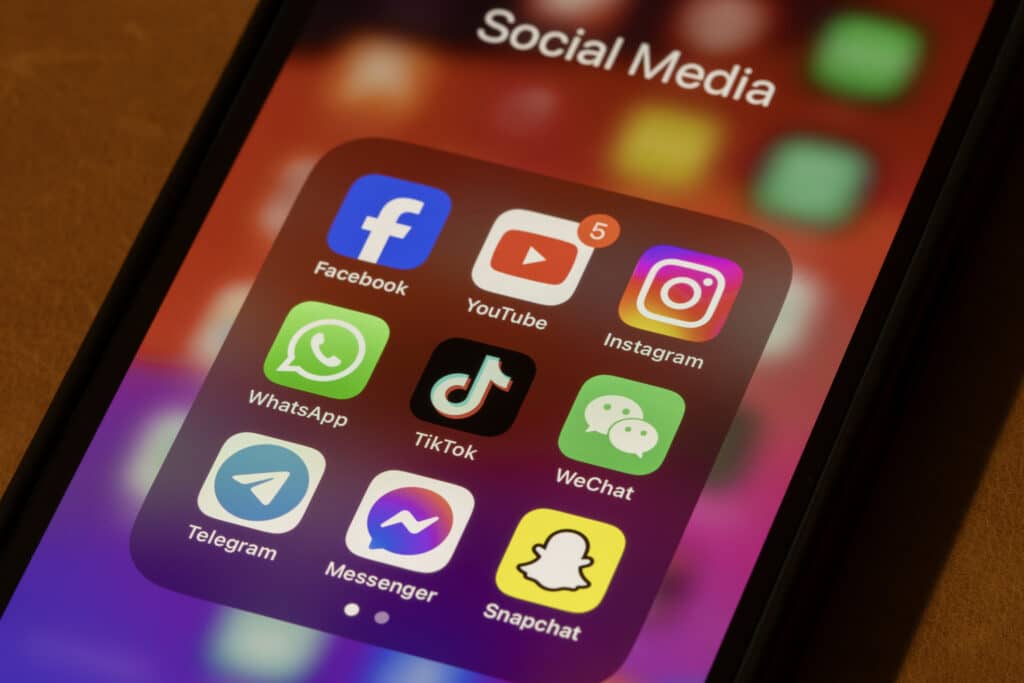
Social media plays a major role in everyday life. From sharing updates on Facebook to posting photos on Instagram or commenting on TikTok videos, these platforms can feel like harmless outlets for connection and self‑expression. However, if you have an active Washington State Labor & Industries (L&I) claim, what you post online can have serious and unintended consequences.
At Emery | Reddy, PC, we work with injured workers across Washington who are shocked to learn that social media activity, often innocent or taken out of context, has been used to challenge their workers’ compensation claims. Understanding how social media affects your L&I claim is an essential step in protecting your benefits and your future.
Why Social Media Can Impact an L&I Claim
An L&I claim relies heavily on medical documentation, reported symptoms, and evidence that your injury or occupational disease is work‑related. Unfortunately, insurers and self‑insured employers often look beyond medical records when evaluating claims. Social media has become one of the tools they may use to question credibility or minimize injuries.
Even a single post can be misinterpreted. A photo showing you attending a family gathering, smiling at an event, or engaging in light activity may be used to argue that your injury is not as serious as you claim, that you are capable of returning to work, or that your physical limitations are exaggerated. These assumptions often ignore pain levels, medical restrictions, and the reality that injuries are not visible in a snapshot.
How Employers and Insurers Monitor Social Media
Many injured workers assume that if their social media accounts are set to private, their content is completely protected. Unfortunately, that is not always the case. Public posts can be viewed freely, but even private content can sometimes become accessible through other means.
Employers and insurers may review posts you share publicly, examine photos or videos where friends have tagged you, or use investigations that capture online activity over time. In some cases, social media content may surface during protests, appeals, or litigation related to your claim. What feels personal or informal to you can be scrutinized through a legal lens that is not sympathetic or nuanced.
How Innocent Posts Can Be Used Against You
A common mistake injured workers make is assuming that posts showing normal life activities are irrelevant. In reality, insurers often use social media to suggest inconsistencies between what you report to doctors and what appears online.
For example, casual comments about feeling “better,” “good,” or “finally normal” may be interpreted as full medical recovery, even if you were speaking emotionally rather than physically. Photos of vacations, home projects, or social outings can raise concerns if you are receiving time‑loss benefits, regardless of whether those activities exceeded your medical restrictions. Even being tagged in someone else’s post can create issues that are completely out of your control unless precautions are taken.
Can Social Media Lead to Claim Denial or Closure?
Yes. Social media evidence has been used to justify reduced benefits, terminated time‑loss payments, or premature claim closure. It is also sometimes relied upon during Independent Medical Exams (IMEs), where L&I-approved doctors may cite social media activity to dispute symptoms or contradict your treating physician’s recommendations.
When this happens, injured workers often feel blindsided. A claim that seemed stable can suddenly become vulnerable based on online content that does not accurately reflect the injury or recovery process.
How to Protect Yourself Online During an Active L&I Claim
You do not need to completely disappear from social media while your claim is active, but you do need to be cautious. The safest approach is to limit what you share and how visible it is. Keeping profiles private is helpful, but it is not a guarantee. Avoid posting photos or videos that show physical activity, travel, or projects that could be misinterpreted. It is also wise to refrain from discussing your injury, recovery, or work status online altogether.
Equally important is asking friends and family not to tag you in posts or photos. Even well‑meaning posts can cause problems if they create the wrong impression. One critical rule is never to delete posts without speaking to an attorney first, as deleting content during a claim may appear suspicious and raise additional legal concerns.
Is Using Social Media Evidence Legal?
In many situations, yes; particularly when posts are publicly available. However, there are limits, and social media evidence is often taken out of context or given more weight than it deserves. When insurers or employers rely too heavily on online content, that evidence can sometimes be challenged.
An experienced L&I attorney knows how to identify when social media is being misused, how to push back against unfair IME findings, and how to ensure your claim is evaluated based on actual medical evidence rather than selective online moments.
How Emery | Reddy Helps Injured Workers
At Emery | Reddy, we understand the tactics used by L&I, insurers, and self‑insured employers because we deal with them every day. Our attorneys regularly advise injured workers on how to protect themselves throughout the life of a claim, including navigating issues related to surveillance and social media.
We help injured workers challenge unfair claim decisions, protect improperly reduced benefits, and fight premature claim closures. Most importantly, we focus on making sure that your medical reality, not social media assumptions, drives the outcome of your case.
Protect Your L&I Claim
Social media may feel like a harmless part of daily life, but during an L&I claim, it can quietly become evidence. A single post can influence decisions about your benefits, your ability to heal properly, and your financial security.
If you have an active L&I claim and are unsure how your online activity could affect it, getting legal guidance early can make a significant difference. Emery | Reddy offers free case reviews and is dedicated to protecting Washington workers every step of the way.
Whether you’ve been injured on the job, subjected to mistreatment in the workplace, or affected by a privacy breach, our expert attorneys are here to help.
"Very friendly interview and intake process. I was informed thoroughly about the processes in obtaining a lawyer and was given ample time to make a decision on representation. I’m thankful for everyone’s help and looking forward to working with this Firm on my worker’s compensation claim."
To provide the best experiences, we use technologies like cookies to store and/or access device information. Consenting to these technologies will allow us to process data such as browsing behavior or unique IDs on this site. Not consenting or withdrawing consent, may adversely affect certain features and functions.
Functional
Always active
The technical storage or access is strictly necessary for the legitimate purpose of enabling the use of a specific service explicitly requested by the subscriber or user, or for the sole purpose of carrying out the transmission of a communication over an electronic communications network.
Preferences
The technical storage or access is necessary for the legitimate purpose of storing preferences that are not requested by the subscriber or user.
Statistics
The technical storage or access that is used exclusively for statistical purposes.The technical storage or access that is used exclusively for anonymous statistical purposes. Without a subpoena, voluntary compliance on the part of your Internet Service Provider, or additional records from a third party, information stored or retrieved for this purpose alone cannot usually be used to identify you.
Marketing
The technical storage or access is required to create user profiles to send advertising, or to track the user on a website or across several websites for similar marketing purposes.