

Weekly News Update — April 25, 2025
Washington Amends Employee Personnel File Access Laws The Washington Legislature passed an amendment to laws regarding employee personnel files. These changes provide a definition for the...
Read More
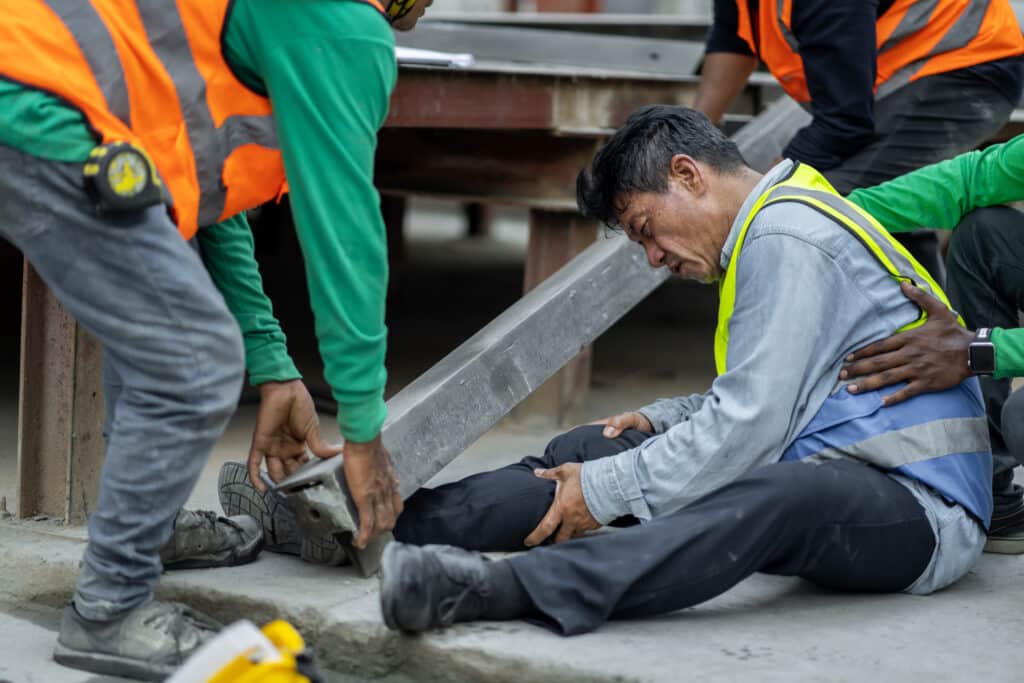
You can become injured at any time. While you should always report an industrial injury to your employer and L&I, some workplace accidents are much more common than others. Read on to learn about the top 10 most common accidents reported to the Washington State Department of Labor and Industries, according to the most recent data.
Keep in mind the difference between workplace accidents and injuries. While an accident is an event, an injury is the cause for your taking time away from regular duties, whether it be work with restrictions or medical leave. A claim can have multiple injuries, but only one accident. Of all 39 types of workplace accidents, these are the top 10 most common:
The least common of the ten, there were still nearly 3,000 reported to the Department of Labor and Industries in 2022. These accidents are costly to compensate and are responsible for many fatal construction-site accidents.
Many jobs require workers to perform the same motion repeatedly, leading to stress and wear on joints, tendons, and ligaments. Rather than a specific incident, these accidents and injuries are occupational illnesses or injuries caused by continuous damage to a muscle or muscle group. Physical labor is not the only way workers can develop a repetitive stress injury; typing, playing instruments, and poor posture can all contribute to repetitive motion injuries.
L&I covers more than just dog bites. Zookeepers, animal control officers, veterinarians, and ranch hands all encounter animals as part of their duties. Animals are unpredictable and cause great injury or death when frightened, provoked, or stressed. Not only can workplace accidents with animals result in physical injury such as punctures, lacerations, and broken bones, but they can also leave workers with emotional trauma.
A fall to a lower level is a fall to a point of contact that is lower than the surface supporting the worker, including stairs, ladders, or platforms, among others. Any fall can be dangerous; falls to a lower level are among the most fatal of workplace accidents. Injuries from these accidents cost L&I more than almost any other, just behind overexertion and falls on the same level.
These accidents are the result of a worker forcibly impacting an object. Unlike workplace accidents where workers are struck by an object, these accidents happen when a worker is in motion. These injuries can result in anything from bruises to breaks, and they include accidents like walking into a stationary object, being thrown from machinery, or hitting the dashboard of a vehicle in an auto accident.
Naturally, we all have limits. Bodily reaction injuries are most often caused by a worker pushing past their limits. Most often, bodily reaction injuries are the result of repetitive stress rather than a specific accident. Strains, herniation, carpal tunnel, and back injuries are examples of bodily reactions that can be caused by a specific workplace accident or repetitive motion.
Exposure can include inhalation, ingestion, or contact with the skin or eyes. Injuries from these types of toxic accidents are caused most often by chemicals, though in some cases the injuries are a result of a worker’s own allergies to foods or other substances. The exposure can take years to affect a worker and may not be noticeable upon initial contact.
Though more common, injuries caused by falls on the same level have a lower average compensation amount to injuries caused by falls to a lower level. Unlike other injuries, falls on the same level — or slip-and-fall accidents — happen across all industries. They can cause scrapes and bruises, or fatal injuries like breaks or head trauma.
Like bodily reaction accidents, overexertion is a direct result of pushing past natural physical or mental limitations. Overexertion can cause serious injury, including sprains, tears, swelling, and other non-impact injuries. These types of injuries cost the Department of Labor and Industries more in total than any other workplace accident, at a total of $196 Million in 2022.
The most common workplace accident, being struck by an object can be fatal. These accidents can include objects that fall, swing, fly, or roll into you with force. Most often, these objects are pieces of tools or equipment that are improperly attached during use.
A workplace accident can happen any time. While you can take steps to prevent an injury, there is no way to guarantee you won’t get hurt. No matter the seriousness of the injury, you deserve compensation for your trauma, treatment, and time away from work. An experienced L&I Attorney who understands the system can help you get the proper compensation and treatment for your injury.
Whether you’ve been injured on the job, subjected to mistreatment in the workplace, or affected by a privacy breach, our expert attorneys are here to help.