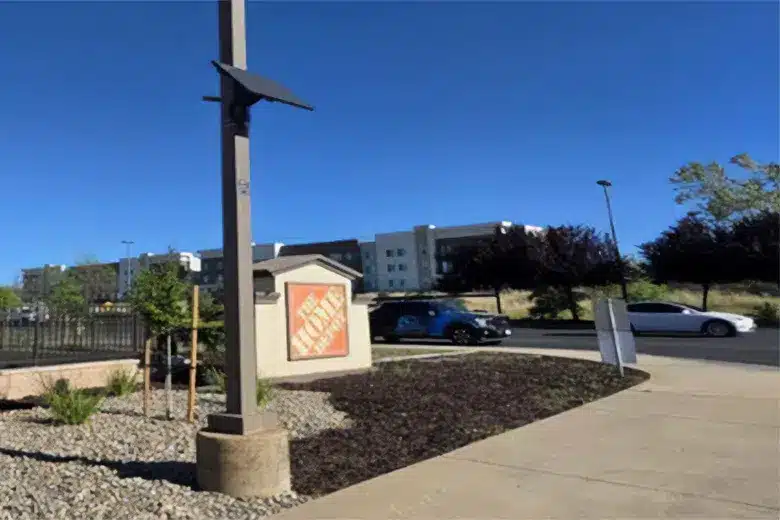
Across California, everyday shoppers may have unknowingly had their movements tracked and shared with law enforcement while visiting Home Depot. A newly filed class action lawsuit alleges the nation’s largest home improvement retailer installed automated license plate recognition (ALPR) cameras in store parking lots and allowed wide‑ranging access to that data without proper notice and in violation of California privacy laws.
What Are ALPR Cameras and Why Do They Matter?
Automated license plate recognition (ALPR) cameras capture far more than a simple plate number. According to the complaint, the system used at California Home Depot stores allegedly collects:
- License plate numbers
- Vehicle make, model, color, and distinctive features
- Date, time, and precise location of each scan
This information is then stored in a searchable database that can be queried later. While ALPR technology is sometimes used for limited security purposes, California law strictly regulates how these systems may operate, especially when private companies collect data from the public.
The Allegations Against Home Depot
The lawsuit claims Home Depot, through a third‑party technology vendor, installed ALPR cameras at entrances and exits of its California parking lots without providing legally required disclosures to customers. Plaintiffs allege the retailer failed to comply with multiple state privacy laws, including:
- California’s Automatic License Plate Reader Privacy Act
- The California Consumer Privacy Act (CCPA)
- California’s Unfair Competition Law
According to the complaint, Home Depot’s alleged violations include failing to publish a compliant privacy policy, neglecting to define how long license plate data would be retained, and authorizing broadly worded data sharing for law enforcement purposes without meaningful safeguards.
The result, plaintiffs say, is a powerful private surveillance network operating quietly in places where consumers reasonably expect privacy.
Alleged Access by Law Enforcement Agencies
One of the most troubling allegations is that Home Depot’s license plate data may have been accessible to a nationwide network of law enforcement agencies. The lawsuit claims the system allows police to:
- Search vehicle histories
- Receive automated alerts when a target vehicle enters a Home Depot parking lot
- Access a database connected to billions of license plate records nationwide
Plaintiffs further allege that similar ALPR networks have been used for immigration enforcement, protest surveillance, and tracking individuals without warrants, raising serious civil liberties concerns.
While Home Depot has publicly denied coordinating with federal immigration authorities, the plaintiffs argue that the company’s data‑sharing practices lack transparency and meaningful legal limits, exposing consumers to unlawful monitoring.
Why California Privacy Law Is So Important
California enacted the ALPR Privacy Act to prevent exactly this type of unchecked surveillance. The law requires organizations that use license plate readers to:
- Maintain and publicly post a detailed usage and privacy policy
- Designate a responsible custodian for the system
- Limit data retention
- Restrict and log all access to ALPR data
Importantly, California courts have held that failing to provide required disclosures itself constitutes harm, even without proof the data was misused. This means companies can be held accountable simply for collecting and storing license plate data unlawfully.
Who Is Affected by the Lawsuit?
The proposed class includes millions of people whose vehicles were allegedly scanned at California Home Depot stores after the cameras were installed. The named plaintiffs are California residents who say their personal location information was collected without notice or consent.
If the class is certified, the case could impact virtually anyone who has driven into a Home Depot parking lot in the state during the relevant time period.
Why This Case Matters Beyond Home Depot
This lawsuit is about more than one retailer. It underscores a growing national issue: private companies using advanced surveillance technologies without transparency, oversight, or meaningful consumer choice.
As license plate readers, facial recognition tools, and AI‑driven monitoring become more common, the outcome of this case could help define the limits of corporate surveillance and reinforce that privacy laws still apply, no matter how large the company.
What Consumers Should Know Now
If you shop at large retailers, especially in California, this case is a reminder to:
- Pay attention to posted privacy notices, or the lack thereof
- Understand your rights under state privacy laws
- Recognize that surveillance technologies are increasingly used in everyday settings
Consumers have legal protections, and companies that ignore them can be held accountable.
Schmierer, Ausseiker, Linder, Hopton and Harhay are represented by M. Anderson Berry, Gregory Haroutunian and Brandon P. Jack of Emery | Reddy, PC, and Heather M. Lopez and Michael Acciavatti of Milberg Coleman Bryson Phillips Grossman PLLC.