Axon’s License Plate Cameras Are Now in California. Businesses Using Them Could Owe $2,500 Per Person.
Axon is best known for police Tasers and body cameras. In April 2025, the company launched its own license plate camera hardware, called Axon Outpost and Axon Lightpost. Both devices read license plates on passing cars and turn the numbers into searchable data. Emery | Reddy, PC is investigating California businesses that use Axon’s cameras, or run similar automated license plate reader (ALPR) systems, to find out whether they are following the state’s camera privacy law. If you’ve seen a camera like this at a California business, tell us where. Your report helps our investigation and may support a legal claim.
What Axon Is Building
Axon is best known for Tasers and police body cameras. In April 2025, Axon announced its own license plate camera hardware: two devices called Axon Outpost and Axon Lightpost. Forbes and the Electronic Frontier Foundation (EFF) both reported on the launch.
Both devices read license plates on passing cars and turn the numbers into searchable data. Axon Outpost is a fixed camera built for poles, buildings, trailers, or trees. Axon Lightpost is built to mount inside an existing streetlight fixture, so it can blend into its surroundings more than a standalone camera on its own pole.
An automated license plate reader, or ALPR, is a camera system that reads a license plate. It uses software called optical character recognition, which turns a photo of text into computer-readable text. Systems like Axon’s also usually record the date, time, and location of each scan.
What Axon’s Cameras Look Like
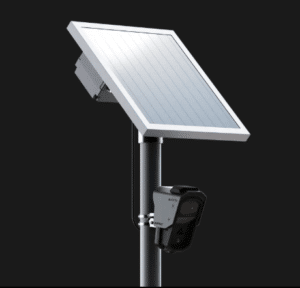
Axon Camera
Axon’s cameras are new enough that most people have never seen one up close. The photos below show Axon Outpost and Axon Lightpost so you know what to look for at a California business or on a nearby streetlight.
Fusus and California’s “Connect” Programs
Axon also owns a separate platform called Fusus. Several California police departments use Fusus to pull in live video, often from private security cameras owned by local businesses. That video feeds into a real-time system that officers and dispatchers can watch.
These programs are usually branded “Connect” plus the city name. Confirmed programs are already running in San Jose, Campbell, Orange County, Modesto, and Oceanside. In Campbell, police partnered with Fusus to build an interactive map of registered private cameras. Oceanside’s program has two levels: a basic camera registry, and a second level that gives police live camera access.
These “Connect” programs are opt-in for camera owners. Axon says businesses control how and when police can access their footage. But we don’t know whether any specific camera in these programs also reads license plates. If it does, that camera would need to follow California’s ALPR disclosure rules. That’s exactly what we’re trying to find out.
California’s ALPR Law and the $2,500-Per-Person Rule
California regulates private ALPR use under Civil Code Sections 1798.90.51 through 1798.90.55. Any business that runs an ALPR system must write a usage and privacy policy. That policy has to cover seven specific points, including:
- Why the business is allowed to use the system.
- How long the business keeps the data.
- Who the business can share the data with, including police.
- How the business checks that it’s following its own policy.
The policy also has to be posted where the public can easily find it. A policy buried behind several links doesn’t count. Each violation carries a minimum of $2,500 in damages per person.
Why We’re Focused on Axon
Axon’s cameras are new to California, and most people have never seen one before. We have not confirmed that any California business has bought Axon’s Outpost or Lightpost cameras for its own property. So far, the confirmed California uses of Axon’s ALPR hardware are on city- and police-owned streets, and through the Fusus “Connect” programs described above, not on individually owned business property. That is the gap we are trying to close. We want to know where Axon’s cameras are actually showing up in California, and whether any business using one is following the state’s disclosure law.
If you’ve seen an unfamiliar camera mounted on a streetlight, utility pole, or building at a California business, especially anything that looks like Axon’s Outpost or Lightpost, tell us where. Contact Emery | Reddy today.
This investigation is focused on Axon’s cameras specifically. If you’re confident what you saw is a Flock camera, you don’t need to report it here.
Frequently Asked Questions
What is an automated license plate reader (ALPR)?
An ALPR is a camera system that reads a passing car’s license plate and turns it into searchable data. Many systems also record the date, time, and location of each scan.
Do I have to prove a camera actually read my plate to help?
No. We just need to know where you saw the camera. If you saw a fixed camera at a California business that you think might be an ALPR, or connected to a police network, tell us where and when.
What information should I include when I report a camera?
Include as much as you can:
- The business name and address, if you know it.
- The city where you saw it.
- The approximate date.
- Whether it looked like Axon’s Outpost or Lightpost, or a brand you couldn’t identify.
- A photo. This is the most important detail. It helps our case team confirm what type of camera it is.
- Any signage or posted policy you noticed nearby.
What if I think I saw a Flock camera instead of an Axon camera?
This investigation is focused on Axon’s cameras specifically. If you’re confident what you saw is a Flock camera, you don’t need to report it here.
Do I have to prove my data was misused to have a claim?
No. Under California’s ALPR Privacy Act, a business can be liable just for failing to post a required policy. You don’t have to prove the data was shared or misused.
What general risks come with license plate and location tracking?
License plate data can show a person’s daily routine, including where they work, where they get medical care, or where they spend time. When this data is tied to a date, time, and location, California treats it as especially sensitive.
Has a lawsuit been filed against Axon or any specific business over this?
Not as part of this investigation. Emery | Reddy is gathering information about where Axon’s cameras are actually located in California.
Do I have a legal claim?
California businesses that run license plate readers have a legal duty to write and publicly post a compliant privacy policy. The same duty applies if a business connects its cameras to a real-time police network with ALPR features. If a business near you didn’t meet that duty, you may have a claim worth pursuing. Contact Emery | Reddy, PC today for a Free Case Review. There is no fee unless we recover for you.