

Weekly News Update — November 25, 2024
Washington State Workers' Compensation Costs to Increase by 3.8% in January Washington state's workers' compensation costs will rise by 3.8% starting in January, with employers and workers...
Read More
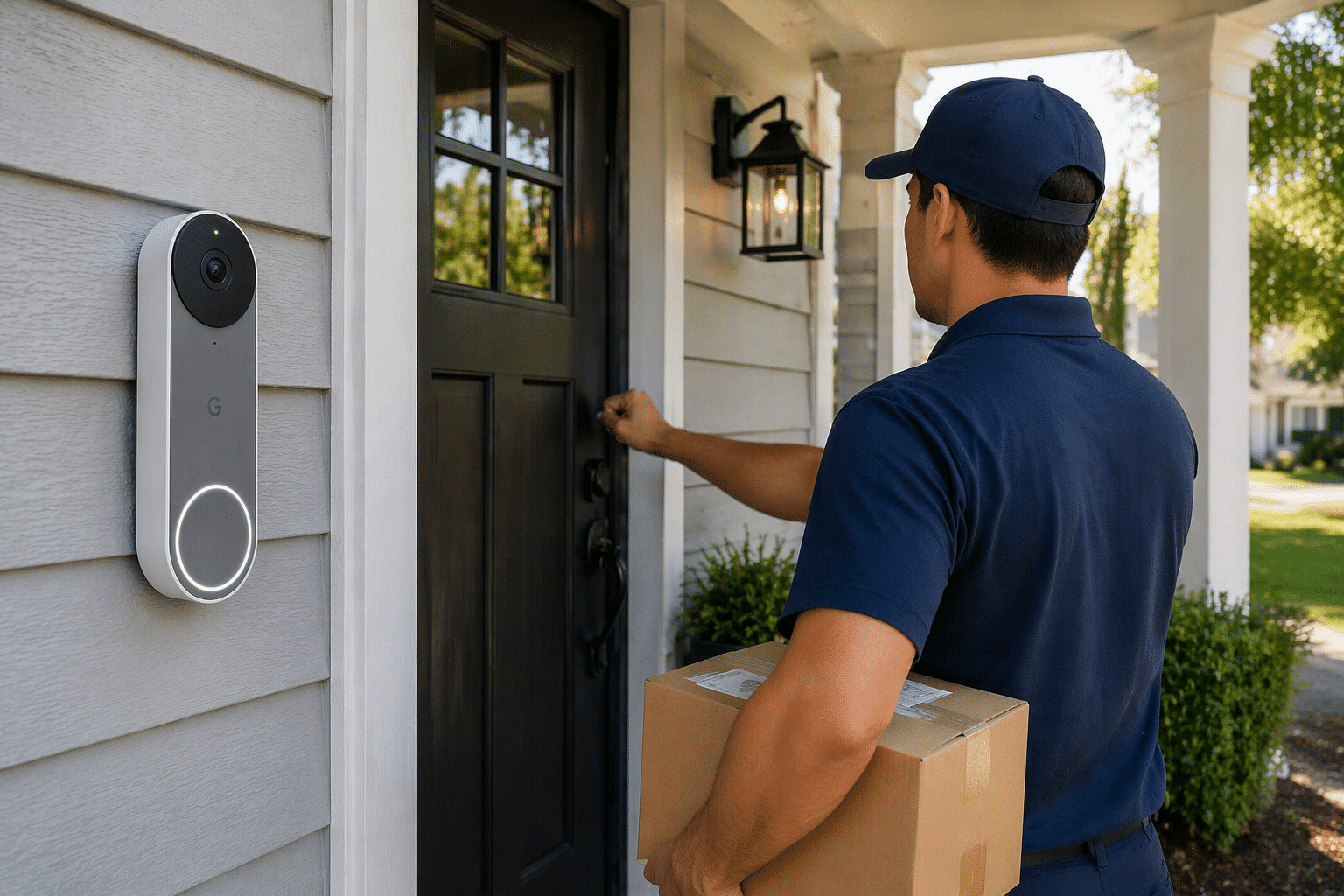
If you work as a package delivery driver, courier, shipping specialist, or route-based service professional, chances are you’ve approached thousands of front doors during your career.
What many workers don’t realize is that an increasing number of those homes may be equipped with smart doorbells and security cameras capable of doing more than simply recording video. Some devices offer facial recognition features designed to identify and re-identify people who appear within a camera’s field of view. According to a recently filed court complaint involving Google’s Nest products, certain Nest devices may scan and process facial information when a feature known as Familiar Face Detection is enabled.
For delivery workers who spend their days traveling through residential neighborhoods, this raises important privacy questions.
Most people occasionally walk past a home equipped with a video doorbell. Delivery workers, however, may encounter dozens of camera-equipped homes every day.
Whether you work in:
your job requires frequent interactions with residential properties. Many drivers also return to the same neighborhoods and addresses week after week.
As a result, package delivery professionals may appear in front of smart doorbells and security cameras far more often than the average member of the public.
Facial recognition technology generally works by analyzing facial features and converting those features into a unique biometric identifier. Google’s Familiar Face Detection feature captures facial images, analyzes facial geometry, creates what it describes as a “faceprint,” and compares that information against stored profiles used to recognize individuals who return to a property.
Unlike passwords or account credentials, biometric identifiers are tied to an individual’s physical characteristics. Facial geometry is an immutable form of personal information because it cannot simply be changed if compromised.
For workers who spend substantial time in front of residential cameras, repeated exposure to facial recognition systems may be a significant privacy concern.
Many delivery professionals work established routes. A courier may visit the same homes multiple times each month. Drivers often become familiar faces in the neighborhoods they serve.
Familiar Face Detection is intended to recognize returning individuals and distinguish between familiar and unfamiliar faces and that technology processes facial information each time a person enters the device’s field of view when the feature is enabled.
For package delivery workers, this means the same homes visited repeatedly during the course of employment could potentially create repeated opportunities for facial data collection.
Smart doorbells and home security cameras have become increasingly common throughout the United States. Nest-branded doorbells and cameras are marketed as home security products and are installed at homes and businesses across the country.
As adoption of these technologies grows, so does the number of workers whose jobs place them in front of camera-equipped properties.
Package delivery drivers, postal workers, couriers, contractors, roofers, utility workers, construction professionals, and service technicians all routinely enter areas covered by residential surveillance systems.
Because delivery workers often make numerous stops each day, they can be among the most frequently recorded individuals in residential neighborhoods.
Individuals whose faces are processed through Familiar Face Detection are not provided direct notice, an opportunity to consent, or a method of determining whether their biometric information has been collected. Individuals may have no practical way to know when facial recognition technology is operating or whether their information has been stored.
For delivery workers, these issues can be especially important.
Unlike homeowners who choose to install security devices, package delivery drivers generally have no control over the surveillance technology they encounter while performing job duties. Their work requires them to approach homes regardless of whether cameras are present.
As smart home technology continues to expand, questions about notice, consent, and biometric privacy have become increasingly relevant for workers who spend their days in residential communities.
Consider a typical workday for a courier or package delivery driver. The route may involve dozens of residential stops, interactions with multiple camera-equipped homes, and repeated visits to the same neighborhoods.
Nest devices equipped with Familiar Face Detection process the faces of individuals who enter the camera’s field of view and compare that information against stored facial profiles.
Workers whose jobs require regular visits to residential properties may be exposed to these systems far more often than the average person simply because of the nature of their employment.
Those who spend years working delivery routes may have appeared in front of thousands of residential security cameras over the course of their careers.
You may have reason to believe your image was captured if:
Individuals who repeatedly travel through neighborhoods may have their facial information processed multiple times over time if facial recognition features are active.
Package delivery workers perform essential services that require entering residential neighborhoods every day. As facial recognition technology becomes more common in consumer devices, workers who spend their careers in front of residential cameras may find themselves at the center of important privacy questions.
If you work in package delivery, courier services, shipping, logistics, or a similar profession and have reason to believe your face may have been captured by a Nest doorbell or camera equipped with facial recognition technology, you may wish to learn more about your potential rights and whether you could be affected. Call Emery | Reddy, PC today to speak with an experienced Intake Specialist to determine if you may have a claim.
Washington State Workers' Compensation Costs to Increase by 3.8% in January Washington state's workers' compensation costs will rise by 3.8% starting in January, with employers and workers...
Read MoreImage courtesy of Brian Hayes [email protected] If you received a notification that your personal data was exposed in the recent cyberattack on the Pierce County Library system, you’re...
Read More
https://youtube.com/shorts/9r-6EA5qn8Y Two Amazon employees in the retail and warehouse sectors have filed a lawsuit this month, claiming the company restricted their job opportunities in...
Read MoreWhether you’ve been injured on the job, subjected to mistreatment in the workplace, or affected by a privacy breach, our expert attorneys are here to help.